


What's Up, Watershed? Trees Big and Small to Plant This Fall — Three Magnificent Tree Species to Spruce Up Your Yard
When I lived in Vermont during college, the fall was always full of energy. Hoards of tourists would flood into the state, dubbed “leaf peepers” by the locals, to marvel at the beauty of trees turning golden yellow, scarlet red, fiery orange. Interestingly enough, fall isn’t only a great time to look at trees — it’s also a great time to plant trees!
In this edition of “What’s Up, Watershed?” we’ll explain why you should plant a tree this fall and suggest three tree species to spruce up your yard (pun intended).
Chris Bunn
Environmental Program Coordinator
Pennsylvania Resources Council
Just like humans enjoy cool fall temperatures, new trees do the same! At this time of year, trees lose less water through their leaves, making them less stressed and more able to contribute energy to root production. In addition, soil temperatures are ideal for developing a strong root system. Strong roots promote vigorous growth in the spring and better resilience during intense summer temperatures. If you’d like to plant a tree this season, I’ve put together a selection of three trees which are native to the entire state of Pennsylvania. Check it out!
SMALL
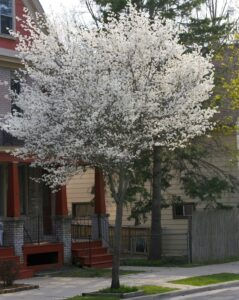
This cute little tree bursts into spring head-first with a blizzard of heavenly-white blossoms. Aptly named, it produces an edible fruit that some say tastes like the cross between a blueberry and raspberry. In the autumn, its leaves turn a festive pumpkin-orange color. Growing only 15 to 25 feet tall, this tree is a great option if you have a small space. Light exposure: full sun to part shade.
MEDIUM

This tree is a great native alternative to the non-native Japanese Maple (acer palmatum). Named for its striking display of crimson red leaves in the fall, Red Maple is a gem for any landscape. Being one of the earliest spring bloomers, this tree provides an important source of nutrition for pollinators. Red Maple grows to be 40 to 60 feet tall. Light exposure: full sun to part shade.
LARGE

Oaks are a keystone species — these are organisms that help to hold an ecosystem together. If removed, it sets off a chain reaction that negatively affects numerous wildlife who are dependent on them. In addition to their vital wildlife importance, they contribute a sense of grandeur and majesty to any landscape. Further, it provides tons of shade which can help make your property cooler. White Oak grows to a height of about 60 to 100 feet. Light exposure: full sun.
You can choose from numerous tree species and sizes, and choosing the right size tree can help you to avoid issues such as trees growing into power lines. Check out this article by the Arbor Day Foundation to learn more about choosing the right tree for your space. Planting a tree properly is also important to ensure long-term health, so check out this article to learn more. Please note that certain trees are native to some regions while non-native in others. To find more native trees for your area, visit the NWF Native Plant Finder here.
Thanks for sticking around, and see you next time for “What’s Up, Watershed?”!
Photos shown above (top to bottom): Allegheny Serviceberry (courtesy of Dan Mullen), Red Maple (courtesy of Willow), White Oak (courtesy of Marty Aligata)


Comments