


What's Up, Watershed? Winter Sowing: A Cheap, Easy, and Efficient Way To Start Seeds
Winter is a great time of year to hunker down, rest, and chill out (hah, get it?). You may be of the opinion that gardening activities are all but over for the year, but I must say that you are mistaken! Today I’m going to teach you about something called winter sowing. No, it’s not your grandmother’s latest fiber arts project — it’s an easy way to produce strong native perennial and vegetable seedlings for a fraction of the cost of buying starts. Let’s dive in!
Chris Bunn
Environmental Program Coordinator
Pennsylvania Resources Council
Winter sowing is a method of starting seeds that mimics nature by placing the seeds of certain plants (such as native perennials) in containers outdoors with soil during the winter. In this post I will focus on native perennial seeds, but it can also be done with annuals and vegetables! Native perennial seeds need several months of cold, wet conditions to soften the shell of the seed and break its dormancy. This is why they can be hard to grow — but winter sowing makes it easy.
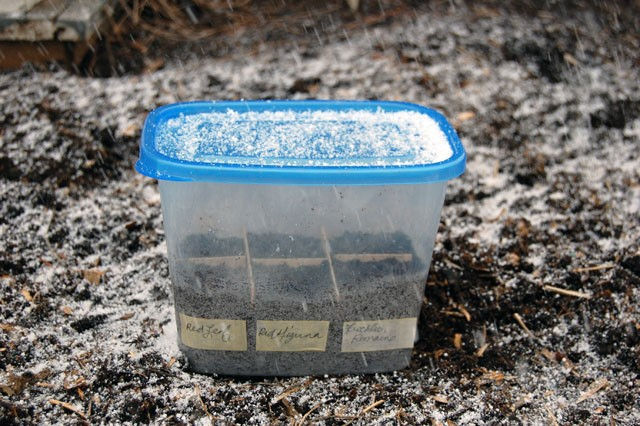
The best time to start winter sowing your native perennials is between the months of December and February.
The simplest explanation of how it works: take an old container such as a milk jug and cut it in half, place moist soil and seeds in the bottom, place the top back on, then put it out into the winter cold. Then when the sprouts naturally emerge in the springtime, you can either put them into bigger pots or transplant them right into your garden. For in-depth instructions on this process, visit this guide by the University of Maryland Extension. Or check out this video if that’s your fancy.

While there are tons of benefits to employing this method, I will focus on two. Firstly, this method is much cheaper than the cost of purchasing native plants from a nursery. Purchasing a packet of seeds can run you around $3, whereas purchasing a single native plant from a nursery can cost as much or more. Secondly, it is much easier than starting seeds indoors in trays. It doesn’t require any special equipment or indoor space, and in most cases you won’t have to water the seedlings after the initial set-up.

So, if you’re going to start winter sowing, you’re going to need some seeds…right?!? Well, you’ve come to the right place. Native plant seeds can be purchased online from businesses such as OPN Seed, Roundstone Seed, and Prairie Moon. To learn about native plants that live in your area, use this native plant finder tool. You can also save seeds from plants in your local area — see guide here.
Thanks for joining us for this month’s edition of “What’s Up, Watershed?”, and we’ll see you next time!
Photos shown above (top to bottom): winter scene (Stefan Klopp), snowy winter sowing (The Art of Doing Stuff), winter sowing starts (sk), milkweed seeds (USFWS Mountain-Prairie)


Comments